





If you’ve ever sat in a board meeting thinking, “We cannot keep fundraising like this,” you’re not alone.
Galas that drain staff energy. One-time gifts that spike in December and disappear by February. Budget conversations driven by anxiety instead of confidence. For many nonprofits, fundraising feels reactive instead of strategic, and boards often don’t realize there’s a better way.
That’s where monthly giving for nonprofit boards becomes a game changer.
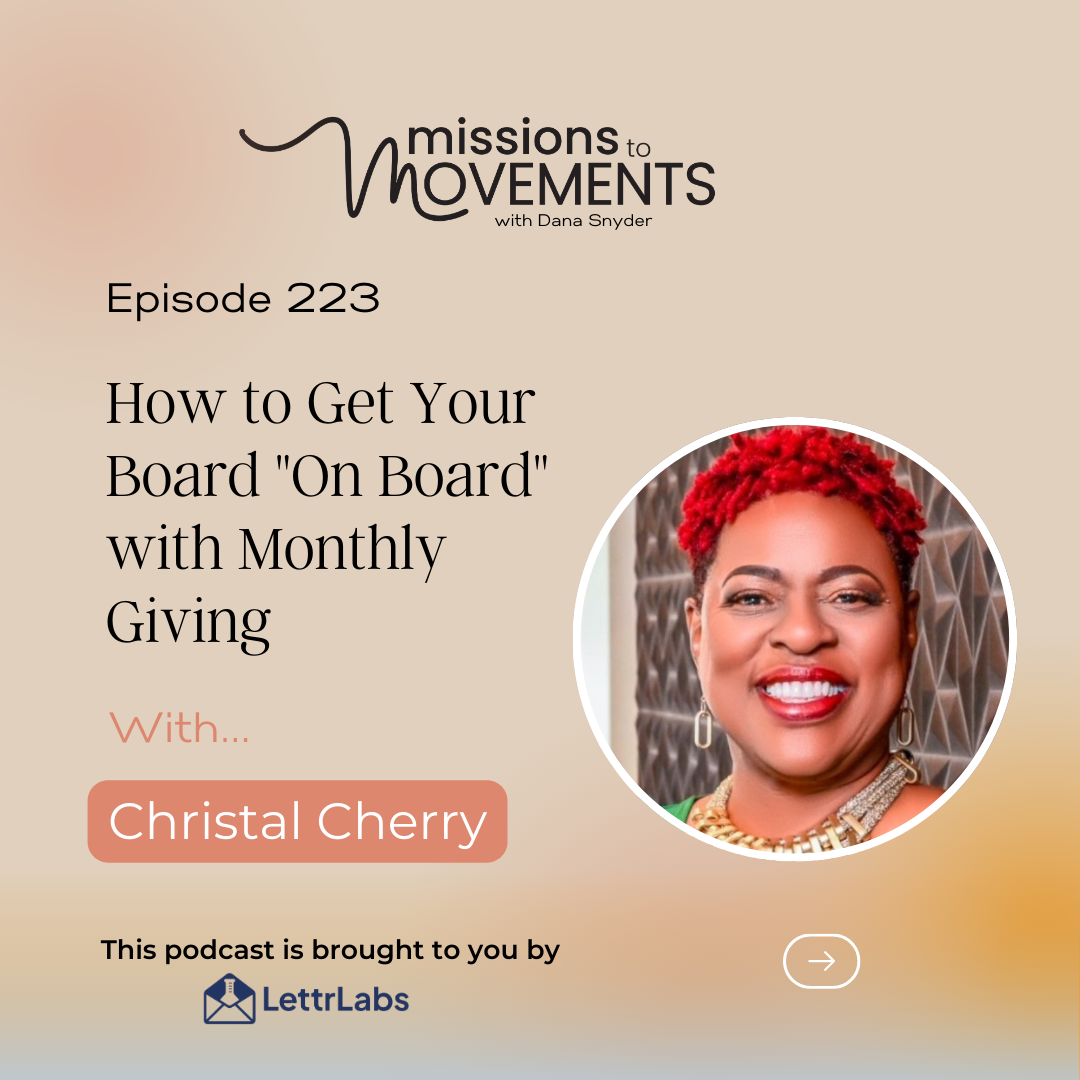
In a recent conversation with board strategist Christal M. Cherry, one truth became crystal clear: monthly giving isn’t just a fundraising tactic. It’s a governance issue. When boards understand, model, and prioritize recurring giving, it fundamentally changes how organizations plan, invest, and lead.
Let’s break down why monthly giving deserves a permanent seat at the boardroom table and how nonprofit leaders can champion it without triggering resistance.
The Biggest Myth Boards Believe About Monthly Donors
One of the most common reasons boards overlook monthly giving is deceptively simple: the amounts look small.
$25 a month.
$50 a month.
$100 a month.
On paper, those gifts can feel insignificant next to a six-figure grant or a high-dollar gala sponsorship. But that mindset misses what monthly donors actually represent.
Monthly donors are your most loyal supporters. They’ve made a commitment, not a one-time decision. They give through leadership transitions, funding crises, economic downturns, and even government shutdowns. When institutions pull back, monthly donors often stay.
Christal shared a powerful example of a couple who quietly gave $150 a month for nearly a decade. No one noticed them. No one thanked them. Yet over time, their giving added up to tens of thousands of dollars and eventually led to a planned gift.
Monthly donors aren’t small donors.
They’re long-term investors.
Why Monthly Giving Reduces Organizational Panic
Boards are responsible for financial sustainability, yet many unintentionally support fundraising models that create instability.
Event-heavy fundraising requires months of planning, heavy staff labor, volunteer coordination, and upfront risk, with no guaranteed return. And if an event underperforms, the organization absorbs the loss.
Monthly giving does the opposite.
Recurring revenue creates breathing room. It allows nonprofits to:
- Cover operating expenses early in the year
- Pay staff consistently
- Invest in better systems and software
- Make strategic decisions without constant crisis mode
Predictability doesn’t just stabilize cash flow. It stabilizes leadership.
When boards understand that monthly giving fuels unrestricted, reliable income, it becomes much easier to see why it deserves long-term investment.
How to Speak “Board Language” About Monthly Giving
One of the most effective ways to get board buy-in is to stop talking about monthly giving abstractly and start showing it visually.
Dashboards matter.
Boards respond to trends, comparisons, and risk analysis. Strong monthly giving dashboards might include:
- Year-over-year growth in monthly donors
- Retention rates of recurring donors
- Donors who have increased their monthly gifts over time
- Five-, seven-, or ten-year donor milestones
- Total cumulative giving from monthly donors
- Revenue the organization would lose if monthly giving disappeared
When boards see that some donors have stayed through CEO turnover, staff changes, funding cuts, and external crises, the value becomes undeniable.
Monthly donors aren’t just revenue.
They’re proof of mission trust.
The Board’s Role in Growing Monthly Giving
Once a board understands the value of monthly giving, the next question is obvious: What’s our role?
According to Christal, it starts with tone-setting.
Boards signal priorities by what they talk about, track, and celebrate. When monthly giving is treated as “extra,” staff treats it that way too. When boards normalize it, everything shifts.
Effective board leadership includes:
- Making monthly giving a formal fundraising priority
- Embedding it into the annual fundraising plan
- Setting clear goals for recurring revenue
- Modeling the behavior through board member participation
- Celebrating growth and progress publicly
Even modest monthly gifts from board members send a powerful message. It’s not about the amount but instead it’s about alignment.
When boards model recurring giving, staff feels supported, and donors feel validated.
Why Celebration and Recognition Matter More Than You Think
Another overlooked piece of monthly giving success is recognition.
Boards often celebrate big wins: major gifts, grants, or sold-out events. But recurring donors rarely get the spotlight, despite being the backbone of stability.
Simple recognition practices can make a big difference:
- Acknowledging donor milestones (5 years, 10 years, cumulative impact)
- Featuring monthly donors in newsletters or social media
- Celebrating growth internally with staff
- Publicly praising fundraising progress at board meetings
When boards treat monthly giving wins as real wins, the entire organization follows suit.
Scaling Back Events to Scale Up Stability
Some of the most successful boards Christal has worked with made a bold but necessary move: they scaled back events.
Not eliminated but right-sized.
They recognized that events carried risk, consumed limited capacity, and often delivered unpredictable returns. By shifting focus toward individual and monthly giving, these organizations reduced burnout and increased financial clarity.
The result? Less dependence on volunteer-heavy planning and more focus on relationship-based fundraising created stronger year-round engagement with donors.
Events stopped being the engine and became just one tool among many.
Predictability Is Power
At the heart of this conversation is a simple truth: predictability changes everything.
When boards know a meaningful percentage of revenue will arrive every month, planning becomes proactive instead of reactive. Conversations shift from “Can we afford this?” to “What’s the smartest next investment?”
Monthly giving doesn’t just fund programs.
It funds confidence.
And when nonprofit boards champion monthly giving (not as a side project, but as a core strategy) they unlock a future built on sustainability instead of stress.


Comments