

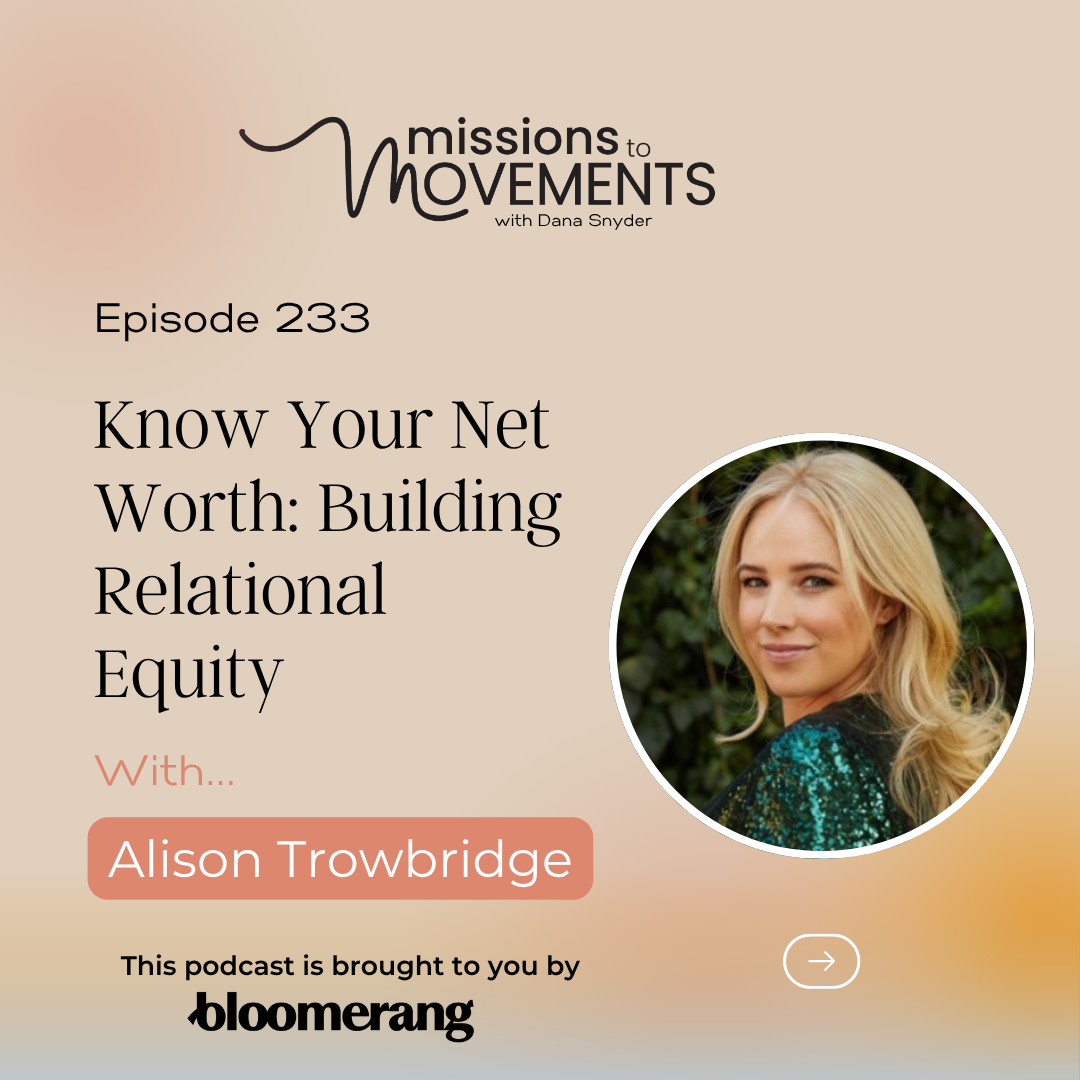


What if the most valuable asset your nonprofit could build wasn’t your donor database, your campaign calendar, or even your funding pipeline, but your relationships?
That’s the powerful idea behind relational equity, a concept explored by host Dana Snyder and guest Allison Trowbridge. And once you understand it, it has the potential to completely reframe how you approach fundraising, community building, and long-term sustainability.
Because here’s the truth: donors don’t just give to causes. They give to people they feel connected to.
The Wealth You Can’t See (But Can Feel)
In finance, wealth grows through compound interest. Over time, small investments turn into something substantial.
Relational equity works the same way.
It’s the compounding value created by consistently investing in people: your donors, your team, your partners, and your broader community. And unlike financial capital, relational equity doesn’t disappear when things get hard. In fact, that’s when it matters most.
Allison Trowbridge knows this firsthand. After building a venture-backed startup with millions in funding, she lost everything: her company, her income, even her home. But what remained was something far more powerful: a network of people who showed up, supported her, and helped her rebuild.
That’s relational equity in action.
Why This Matters More Than Ever
We often think of fundraising as a numbers game: more emails, more asks, more campaigns. But underneath it all is a deeper human need of connection.
Loneliness has become such a widespread issue that it’s now considered a public health crisis, with impacts comparable to smoking 15 cigarettes a day. That’s not just a social issue, it’s a relational one.
And nonprofits are uniquely positioned to respond.
When you focus on building genuine relationships instead of transactional donor interactions, you’re not just raising money—you’re creating belonging. You’re inviting people into something meaningful. And that’s what turns one-time donors into lifelong supporters.
Why “Networking” Feels So Wrong (And How to Fix It)
Let’s be honest: traditional networking often feels uncomfortable.
That’s because it’s usually rooted in a simple question: What can I get from this person?
But relational equity flips that question entirely.
Instead of approaching donors or peers as transactions, the better question becomes: How can I serve this person?
This shift, from taking to giving, is where real relationships begin.
People can sense the difference immediately. When someone feels seen, valued, and supported, trust follows. And trust is the foundation of every meaningful gift, partnership, and long-term commitment.
A Simple Framework to Build Stronger Donor Relationships
You don’t need a complex system to start building relational equity. In fact, the most effective approach is surprisingly simple:
Appreciate, Then Initiate
Start by appreciating the person in front of you:
- Ask thoughtful, curious questions
- Find genuine points of connection
- Offer meaningful, specific compliments
Then, initiate value:
- Make a helpful introduction
- Share a relevant idea, resource, or insight
- Extend an invitation to continue the relationship
This isn’t about grand gestures. It’s about small, consistent actions that show people they matter.
Over time, those moments compound, just like interest.
Turning Donors Into Believers
If your goal is to build a sustainable nonprofit, you don’t just need donors. You need believers.
Believers:
- Stay engaged beyond a single campaign
- Advocate for your mission
- Bring others into your community
- Continue giving over time
And belief doesn’t come from a perfectly crafted appeal; it comes from relationship.
When someone feels connected to you and your mission, their support becomes personal. It’s no longer about a transaction. It’s about being part of something bigger.
Building Relational Equity at Scale
As your organization grows, maintaining personal connections can feel challenging. But scaling relationships doesn’t mean losing authenticity.
It means being intentional.
One powerful way to do this is through storytelling, whether that’s through email, events, or even publishing thought leadership. When done well, these tools allow you to build trust and connection with many people at once, while still feeling personal.
Just remember: scale should never replace sincerity. It should amplify it.
The Long Game of Fundraising
Here’s what makes relational equity so powerful: you often don’t see the return right away.
A conversation today might turn into a partnership years from now.
A small act of kindness might lead to major support down the road.
A connection you nurture today could become your strongest advocate in the future.
That’s the nature of compounding relationships.
You’re not just building for your next campaign, you’re building for the long term.
A Simple Question to Start Today
If you want to strengthen your fundraising strategy in a meaningful way, don’t start with your next ask.
Start here: Who can you appreciate? And how can you initiate value for them today?
Because the relationships you invest in now will be the ones that sustain your mission later.
And in the world of nonprofit fundraising, that kind of wealth is invaluable.


Comments