



If you’ve ever found yourself juggling a gala, answering board questions about an underperforming auction, and managing donor communications (all in the same week) you’re not alone. For many nonprofit professionals, especially those on small teams, the pressure to do more with less is constant.
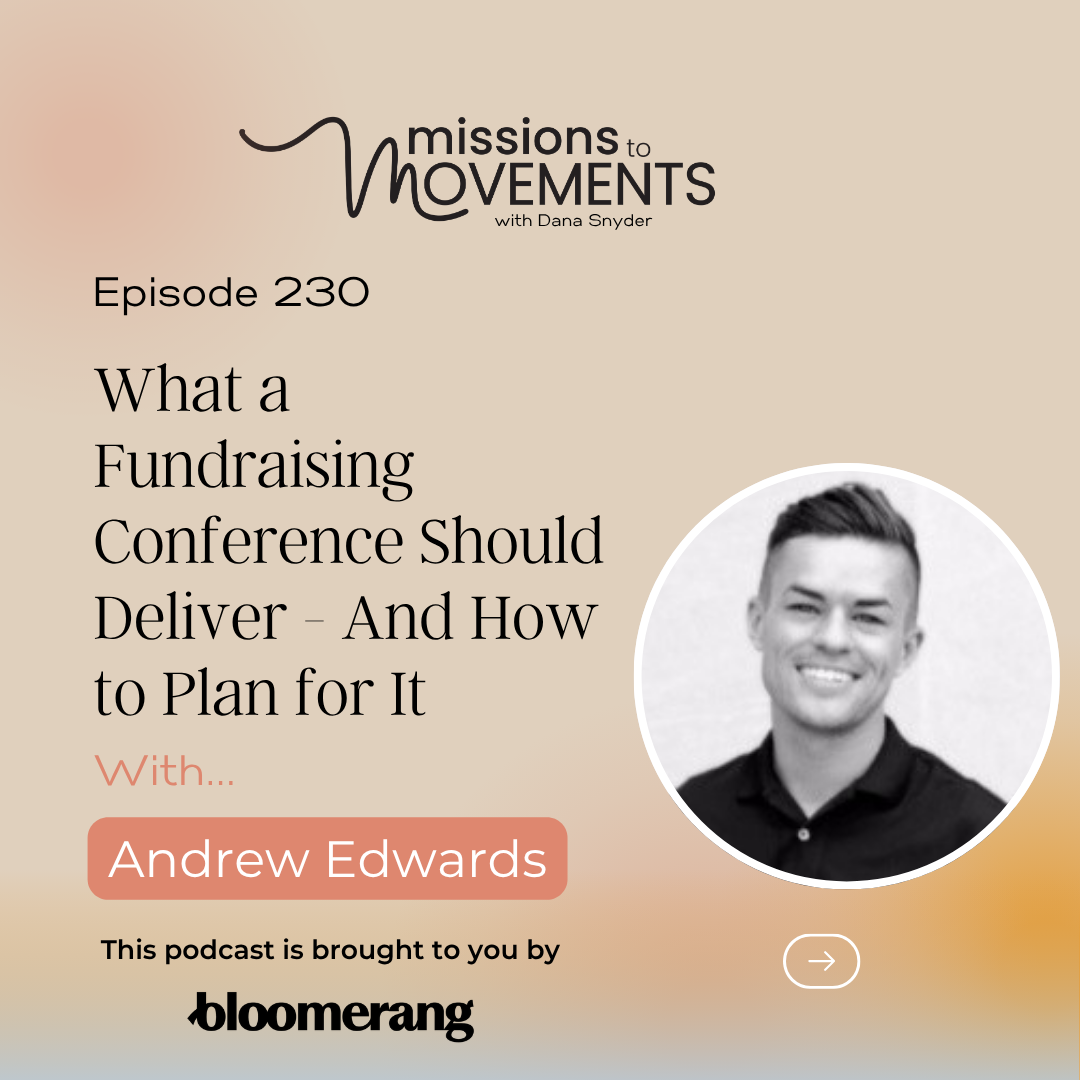
In a recent conversation, host Dana Snyder sat down with fundraising expert Andrew Edwards to unpack a topic that doesn’t get enough practical attention: how nonprofit professionals can actually get value from conferences and why so many events miss the mark.
The truth? It’s not about attending more conferences. It’s about making the right ones count.
Fundraisers Don’t Need More Ideas. They Need Clarity
One of the biggest misconceptions in the nonprofit space is that fundraisers need more ideas. More campaigns. More events. More tactics.
But what Andrew Edwards emphasizes is something far more important: clarity and confidence.
Most fundraisers are already overwhelmed with ideas, many coming from well-meaning board members or stakeholders. What they actually need is the ability to filter through the noise and focus on what truly moves the needle.
For small teams, that often looks like building systems and maintaining focus. For larger organizations, it’s about alignment and scalability. Either way, the goal is the same: work smarter, not harder.
And that’s where the right conference can make a meaningful difference.
Why Most Conferences Fall Short
If you’ve ever left a conference feeling inspired but unsure what to do next, you’re not imagining things.
Too many nonprofit events lean heavily on high-level strategy without offering real-world application. You hear great ideas, but by Monday morning, you’re back at your desk wondering how to actually implement them.
That disconnect between inspiration and execution is where conferences lose their value and where nonprofit conference ROI starts to decline.
The most effective events bridge that gap. They prioritize practical, actionable takeaways that you can implement immediately, whether you’re meeting with a donor next week or planning your next campaign.
The Power of Being Fully Present
One of the simplest but most overlooked ways to maximize nonprofit conference ROI is also the hardest: being fully present.
That means setting an out-of-office message and actually honoring it.
It’s tempting to stay half-connected, checking emails between sessions or trying to manage ongoing projects. But multitasking dilutes the very reason you’re there.
To truly benefit, you have to step away from the day-to-day work and give yourself permission to focus on learning.
This also requires buy-in from leadership. When organizations respect that conference time is dedicated to growth, not just a working trip, it transforms the experience entirely.
Networking That Doesn’t Feel Forced
For many nonprofit professionals, networking can feel intimidating or even inauthentic. But it doesn’t have to be.
The most effective networking starts with something simple: curiosity.
Sitting next to someone new and asking where they’re from, what they do, and what challenges they’re facing can open the door to meaningful conversations. And often, those informal moments: lunch tables, receptions, or small group sessions, lead to the most valuable connections.
Preparation also plays a key role. Researching speakers or attendees ahead of time allows you to be intentional about who you connect with. Instead of wandering aimlessly, you can focus on conversations that align with your goals.
When you approach networking with clarity, it becomes less about “working the room” and more about building genuine relationships.
Making the Case for Conference Investment
One of the biggest barriers nonprofit professionals face is getting approval to attend conferences in the first place.
With tight budgets and competing priorities, professional development often feels like a luxury. But Andrew Edwards challenges that mindset by reframing it as an investment, not an expense.
When staff attend conferences, they don’t just gain knowledge. They bring back tools, strategies, and insights that can directly impact fundraising results.
Even a modest improvement, like increasing a campaign’s performance by 10%, can quickly outweigh the initial cost of attendance.
Beyond financial returns, there’s also a human impact. Investing in your team builds confidence, increases retention, and signals trust. In a sector where burnout and turnover are high, that matters more than ever.
What Makes an Event Truly Memorable
It’s easy to think that standout events are defined by big moments or impressive speakers. But often, it’s the small details that leave a lasting impression.
Long registration lines, slow service, or poorly planned logistics can overshadow even the best programming. On the flip side, thoughtful, seamless experiences create a sense of care and professionalism that attendees remember.
Great events aren’t just informative, they’re intentional. Every touchpoint, from arrival to departure, contributes to the overall experience.
And for nonprofits hosting their own events, that’s an important reminder: how people feel at your event is just as important as what they learn or give.
Turning Insight Into Action
At the end of the day, the true measure of nonprofit conference ROI isn’t how inspired you feel when you leave—it’s what you do differently when you return.
The most valuable conferences equip you with practical tools, clear priorities, and the confidence to act. They help you cut through the noise and focus on what matters most.
Because in a sector where time, energy, and resources are limited, working smarter isn’t just a goal, it’s a necessity.
And when conferences are approached with intention, preparation, and the right mindset, they can become one of the most powerful tools in your fundraising strategy.


Comments